Starting BJJ After 40 in Clarksville TN — What You Need to Know
The most common thing adults over 40 say before their first class at MMAFFC is some version of: "I know I'm probably too old for this." They say it half-joking, half-serious. Coach Don's response is always the same: come train.
There's no diplomatic way to say this: you are not too old. And the concern is understandable but almost always wrong in the specific ways people imagine it.
The Real Age Concern Isn't What You Think
When adults over 40 worry about starting BJJ, the worry is usually framed as athleticism — speed, explosiveness, the ability to keep up with a 22-year-old. That's a legitimate concern if your goal is to compete against 22-year-olds. For the vast majority of adult students, that's not the goal and it's not what the training environment rewards.
What BJJ rewards is technique. The fundamental insight of the art — the reason Helio Gracie developed it the way he did — is that a smaller, less athletic person with good technique can control and submit a larger, stronger, faster person. That principle doesn't expire at 40. If anything, it becomes more important. Younger students often compensate for technical gaps with athleticism. Older students have to learn to be technically correct because they can't muscle through mistakes. That makes them, over time, more precise grapplers.
What Actually Changes After 40
Recovery takes longer. This is real and shouldn't be dismissed. A 25-year-old can train six days a week and recover adequately. Most students over 40 train three to four days a week and give their body proper time to recover between sessions. That's not a limitation — it's a training approach that, managed well, produces consistent improvement without chronic injury.
Joint health matters more. Warm-up is not optional. Getting on the mat cold and going hard immediately is how injuries happen at any age, but the consequences compound faster after 40. MMAFFC's classes include structured warmups that address this. Students who take recovery seriously — sleep, hydration, not skipping warmup — tend to train for years without significant injury.
Ego has to go. This is actually easier after 40 than it is at 22. Younger students often struggle to tap early and accept being dominated by someone smaller or less experienced. Older students generally have enough life context to understand that tapping is data, not defeat. That mindset accelerates learning faster than youth does.
What the First Few Months Look Like
Expect to feel completely lost for the first four to six weeks. This is universal regardless of age. BJJ has a vocabulary of positions, transitions, and submissions that takes time to develop. The early stage is about learning to survive and recognize where you are. It feels slow. It isn't — the foundation being built in those weeks is what everything else sits on.
By month three, patterns start to emerge. You'll have a few positions you understand, a couple of submissions you can see coming. The fog begins to lift.
By month six, you'll have a real game starting to develop. You'll be helping newer students understand things you've already worked through. That shift — from newest person in the room to someone with genuine knowledge to share — is when most students stop questioning whether they belong and start thinking about where they're going.
Coach Don Trains People Your Age
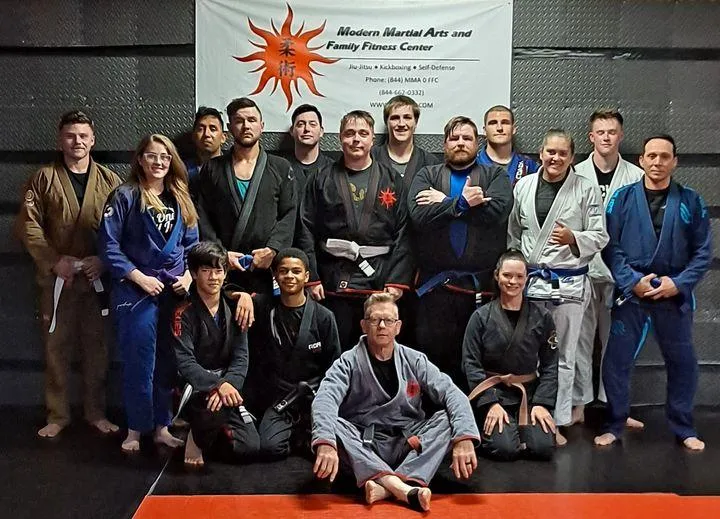
MMAFFC has adult students across a wide age range. The fundamentals class is genuinely mixed in terms of age and experience, and Coach Don structures instruction to develop everyone in the room, not just the youngest or most athletic. Students over 40 are not the exception here — they're a significant part of the gym.
First class is free. No contracts, no sign-up fees.
Ready to Start Training?
Join us on the mats. No contracts, no sign-up fees.