Gi vs No-Gi BJJ — Which Should You Start With in Clarksville?
One of the first questions new students ask before their first class is whether they need a gi — the traditional uniform — or whether they can just show up in shorts and a rash guard. It's a fair question, and the answer matters more than most people realize when they're starting out.
Here's an honest breakdown of gi and no-gi BJJ, what each one develops, and what MMAFFC recommends for someone starting from scratch in Clarksville.
What Is Gi BJJ?
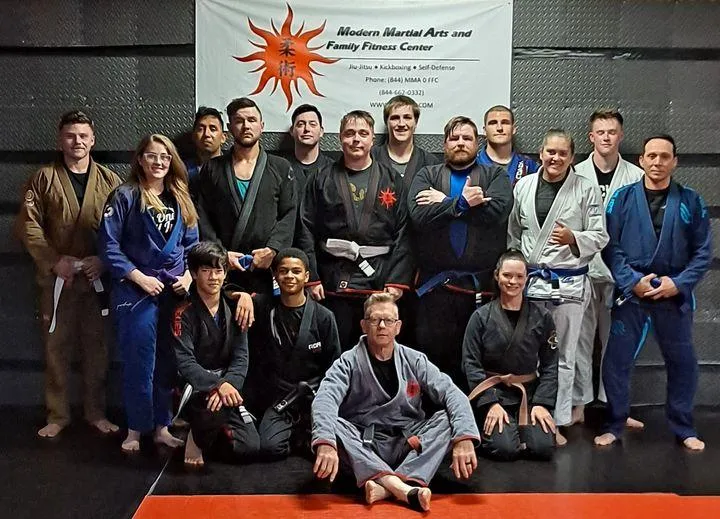
Gi jiu-jitsu is practiced in the traditional uniform: a thick cotton jacket, pants, and belt. The jacket is not just clothing — it's a tool. The lapels, sleeves, and collar are all grippable, which means the gi creates an entirely different grip game than anything you'll find in no-gi training. Chokes using the collar, sweeps using sleeve grips, guard retention using the pants — the gi opens up a technical vocabulary that takes years to fully explore.
Training in the gi slows the game down. Grips create friction and control. Positional fundamentals become more important because you can't just muscle out of things the way you might when everything is slippery. For a beginner, that slower pace is actually an advantage — it gives you more time to understand what's happening and why.
MMAFFC's adult fundamentals class runs in the gi. It's the foundation of the curriculum.
What Is No-Gi BJJ?
No-gi grappling removes the uniform and with it, all the grip-based techniques that depend on fabric. You're in athletic shorts and a rash guard. The game speeds up considerably. Clinch work relies on underhooks, overhooks, and body control rather than grips. The submission game shifts toward leg locks, guillotines, and rear naked chokes — techniques that don't require cloth to set up.
No-gi translates more directly to MMA and to real-world self-defense scenarios where nobody is wearing a gi. It also crosses over naturally with wrestling, which is built almost entirely on body-to-body control.
Which Should a Beginner Start With?
The honest answer from most experienced coaches — including Coach Don — is that beginners benefit most from starting in the gi.
The reasoning is practical. The gi forces you to develop positional fundamentals. Because the game is slower and grips create more control, you have more time to feel what's happening and make corrections. The hip escapes, guard retention, and submission defense that you build in the gi carry directly into no-gi. The reverse is not always true — students who start no-gi often develop habits that work because they're fast or athletic, which creates gaps in their fundamentals that become problems as they advance.
The gi also has a cultural function in BJJ. The belt system is tied to gi training. Promotions happen in the gi. For students who want to understand where they stand in their development, the gi provides the clearest framework.
What If You Want to Do Both?
Judo runs Tuesday and Friday alongside BJJ, giving students cross-training options without leaving the gym. No-gi rounds can be incorporated into open mat by agreement with training partners and coaching. As students develop their fundamentals in the gi class, adding no-gi work during open mat is a natural progression.
Come Try a Gi Class First
MMAFFC offers a free trial class in the adult gi fundamentals program. You don't need to own a gi for the first class — show up in athletic clothes and Coach Don will sort out the rest.
Ready to Start Training?
Join us on the mats. No contracts, no sign-up fees.